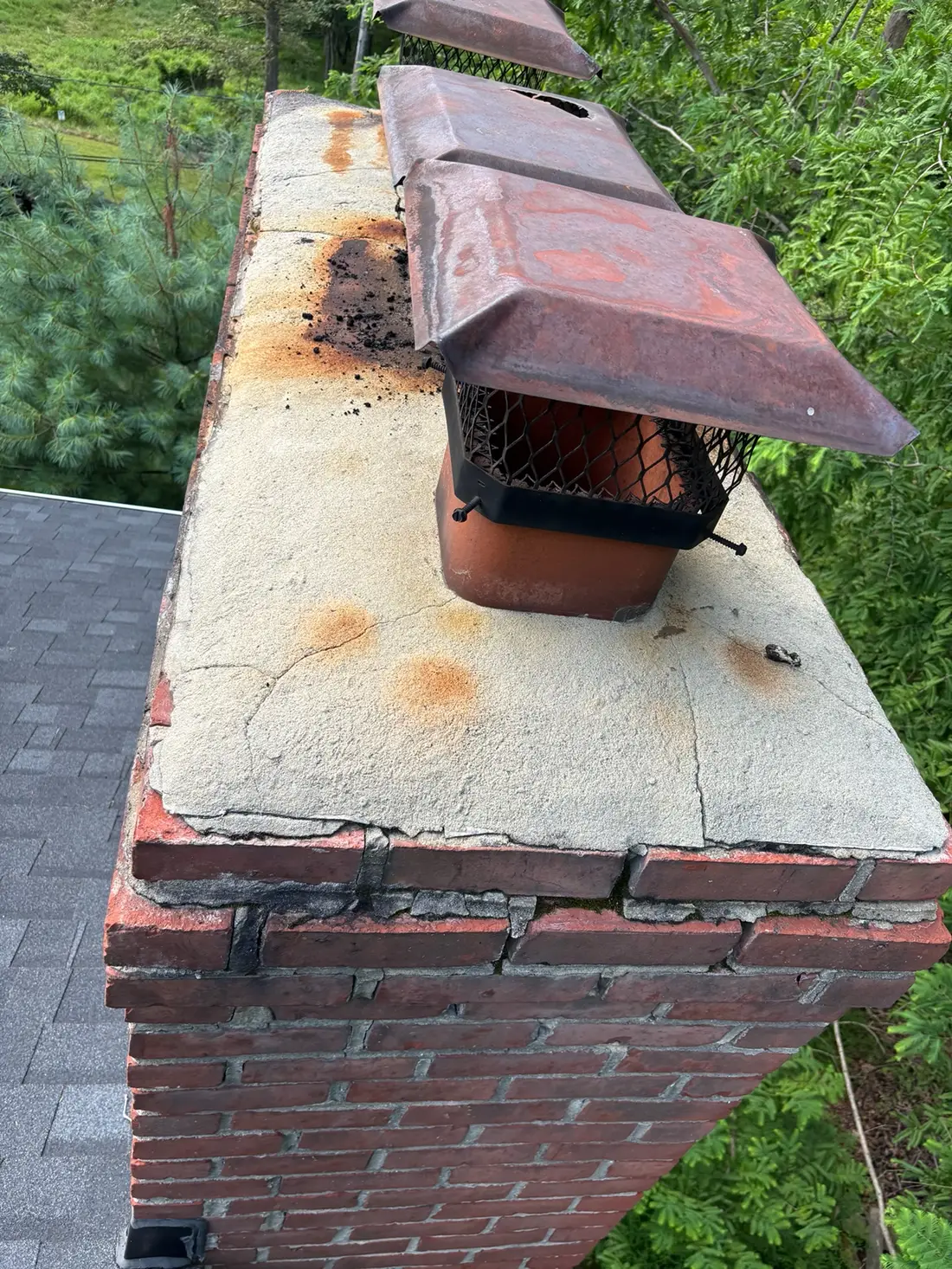
A stain spreads on the ceiling near the fireplace, or water drips into the firebox during a storm, and the chimney becomes the suspect. Fair enough — but "the chimney leaks" is a symptom, not a diagnosis. Water enters a chimney system at a short list of points, each with its own evidence and its own repair. Here is the list, in the order we check it.
Entry point 1: The crown
The crown seals the top of the masonry, and a cracked crown is a funnel: rain lands on the slab and the cracks deliver it into the stack's interior, where it migrates down through the masonry and appears — often far from the source — as staining on ceilings and walls near the chimney, or as the white efflorescence and spalling described in our repair signs guide. Crown water rarely drips into the firebox; it soaks the structure. The evidence is on the roof: visible cracks, displaced sections, or the classic original defect — a crown made of soft mortar, weathering away like a sandcastle. Repair ranges from sealing a sound-but-cracked crown to rebuilding it properly in formed concrete; our caps & crowns page details both.
Entry point 2: The flashing
Where the chimney passes through the roof, metal flashing seals the joint — step flashing woven into the shingles, counter-flashing embedded in the chimney's mortar joints. Flashing fails when its sealant ages out (caulk is a maintenance item with a lifespan, not a repair), when counter-flashing pulls from its joints as mortar erodes, or when a roof replacement was flashed carelessly. Flashing leaks announce themselves honestly: stains on the ceiling or attic directly around the chimney chase, worst in wind-driven rain, and often worse on one side — the weather side. The fix is metalwork, not magic coatings: properly re-flashed joints outlast any surface goop by decades, and painting sealant over failed flashing is how the same leak gets sold three times.
Entry point 3: The mortar joints and brick
A chimney's walls are supposed to shed water; when joints erode and brick spalls, the wall starts absorbing it instead. Wind-driven rain soaks a deteriorated stack like a sponge, and the water emerges inside — at the firebox, on the chimney breast in the living room, or in the attic. This is the slow leak: no drips, just damp that deepens with every storm season. The evidence is the masonry itself — recessed sandy joints, popped brick faces, efflorescence mapping the water's paths. The repair is repointing and brick replacement, followed honestly by the conversation about what let the water in at the top.
Entry point 4: The flue itself
An open or poorly capped flue admits rain directly, and this leak does drip into the firebox — audibly, during storms. Water pools on the smoke shelf, rusts the damper, and keeps the firebox damp and musty. The diagnosis takes one look at the top of the chimney (cap missing, rusted out, or never installed) and the cure is the subject of our cap guide: a stainless cap, and damper repair if the water has already had its way with the metal.
The condensate impostor
Not all chimney water falls from the sky. High-efficiency gas appliances produce exhaust so cool it condenses inside an oversized or unlined flue, and the "leak" that appears in dry weather — damp at the chimney base, eroding mortar, white deposits — is the flue drowning in its own exhaust. The remedy here is not flashing or crowns but a correctly sized liner that keeps exhaust gases warm and moving. An honest leak diagnosis checks the weather pattern of your stains: rain-linked leaks come from the four entry points above; weather-independent damp at the base points at the flue itself.
Why "seal the whole chimney" is the wrong answer
The offer will come — a coating for the entire stack, sold as leak salvation. Masonry needs to breathe: water vapor inside the wall must escape, and trapping it behind an impermeable film accelerates the very freeze-thaw destruction you are paying to stop. Vapor-permeable water repellents have a legitimate, narrow role on sound masonry; a leak cure they are not. Leaks are fixed at their entry points, with the right trade for each — crown concrete, flashing metal, joint mortar, cap steel. That is the whole method, and any proposal that skips the diagnosis to sell the coating has told you its value. Start with an inspection that names the entry point, with photographs, and the repair writes itself.