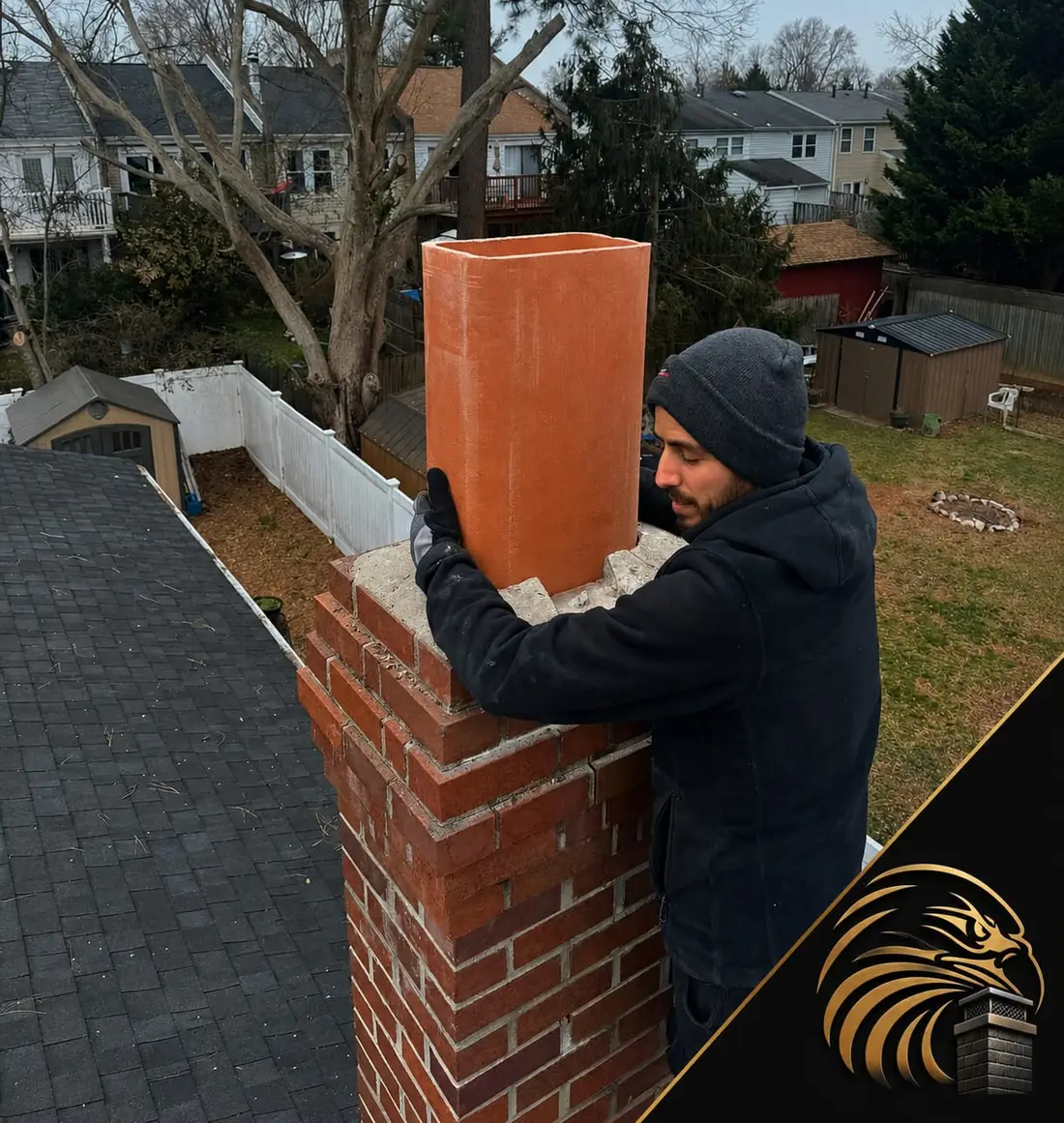
What the liner does — all three jobs
A flue liner is not a lining in the wallpaper sense; it is a working component with three functions. It contains the products of combustion — carbon monoxide and other gases must travel from appliance to sky without leaking into walls, attics or rooms. It protects the masonry from the flue gases themselves, which are acidic and eat mortar from the inside out. And it insulates the chimney structure from flue heat: in a chimney fire, an intact, properly installed liner is the barrier between a thousand-degree event inside the flue and the wooden framing inches outside it. This is why liner condition dominates every camera inspection we perform — everything else about a chimney is maintenance, but the liner is containment.
How clay tile liners fail
Most masonry chimneys were lined with stacked clay tiles, and the tiles themselves are durable; the system fails at its joints and under stress. The mortar between tiles erodes under decades of acidic condensate — oil and gas appliances are hardest on it — leaving gaps that pass gas and heat. Thermal shock cracks tiles: a chimney fire is the dramatic cause, but the common one is a cold flue hit suddenly by a hot fire, season after season. Settling and seismic movement offset tiles at their joints. Water entering from a failed crown freezes inside the flue and splits tiles from within. The camera shows all of it: horizontal cracks glowing in the light, joints recessed to shadow, tiles shifted like a stair step. Once tiles are cracked through or joints are open, no surface treatment restores containment — the flue needs a new inner wall.
The stainless steel liner system
The modern standard is a continuous stainless steel liner, drawn down the flue from the roof and connected to the appliance below. The components: the liner itself (rigid or flexible stainless, in the grade appropriate to your fuel — wood, oil and gas each have their specification), insulation around it (a wrap or poured insulation that keeps flue gases hot for good draft, protects masonry from heat transfer, and is required for the system's safety listing in most installations), a top plate and storm collar sealed under a proper cap, and the bottom connection — tee or direct connect — fitted to your fireplace, stove or furnace. Properly sized to the appliance (an oversized flue drafts lazily and condenses; an undersized one restricts), a stainless liner is a lifetime component: it does not crack, its joints do not erode, and it can be swept with the same brushes as tile — which our sweeping crews do as a matter of routine.
The relining process
Most residential relines complete in one to two days. The old flue is swept clean; where broken tiles obstruct the new liner's path, the obstruction is removed or the tile section is taken out — a decision made from camera footage, not guesswork. The liner is assembled, insulated, lowered into place, connected at the bottom, sealed at the top, and the appliance reconnected. The fireplace or appliance can generally be used once the installation is complete and any mortar work has set. You receive documentation of the system installed — material, diameter, insulation — the paperwork a future buyer, insurer or inspector will ask for, and which should live with your home's records.
Unlined chimneys and appliance changes
Many older homes have no liner at all — brick alone formed the flue, an accepted practice in its era that no one defends now: exhaust against raw brick erodes the mortar from inside, and every joint is a potential leak path. Relining is the standard remedy and transforms both safety and performance. Appliance changes force the question too: a new high-efficiency furnace or a wood stove insert vents differently than what the flue was built for, and an insert in particular must connect to a liner sized to its outlet — venting an insert into a big old tile flue (the "slammer" installation) produces creosote, poor draft and risk in one package. When an inspection precedes an appliance purchase, the liner plan comes before the appliance, which is the order that saves money.
What a liner costs — and what decides it
Relining is the most substantial routine investment in a chimney's life, and its price is driven by physical facts: the chimney's height, the liner diameter your appliance requires, insulation method, whether obstructing tiles must be removed, and access. That is why it is quoted from camera evidence and measurements, in writing, with the footage available to you — a liner quote given over the phone, sight unseen, is a guess wearing a number. What is consistent: a sound liner ends the cycle of interior deterioration, restores the fireplace or appliance to safe use, and is warrantied in a way tile patching never can be. Homes are sold, insured and heated on the strength of that containment. When the camera says yours is compromised, the liner is not an upsell — it is the repair itself.