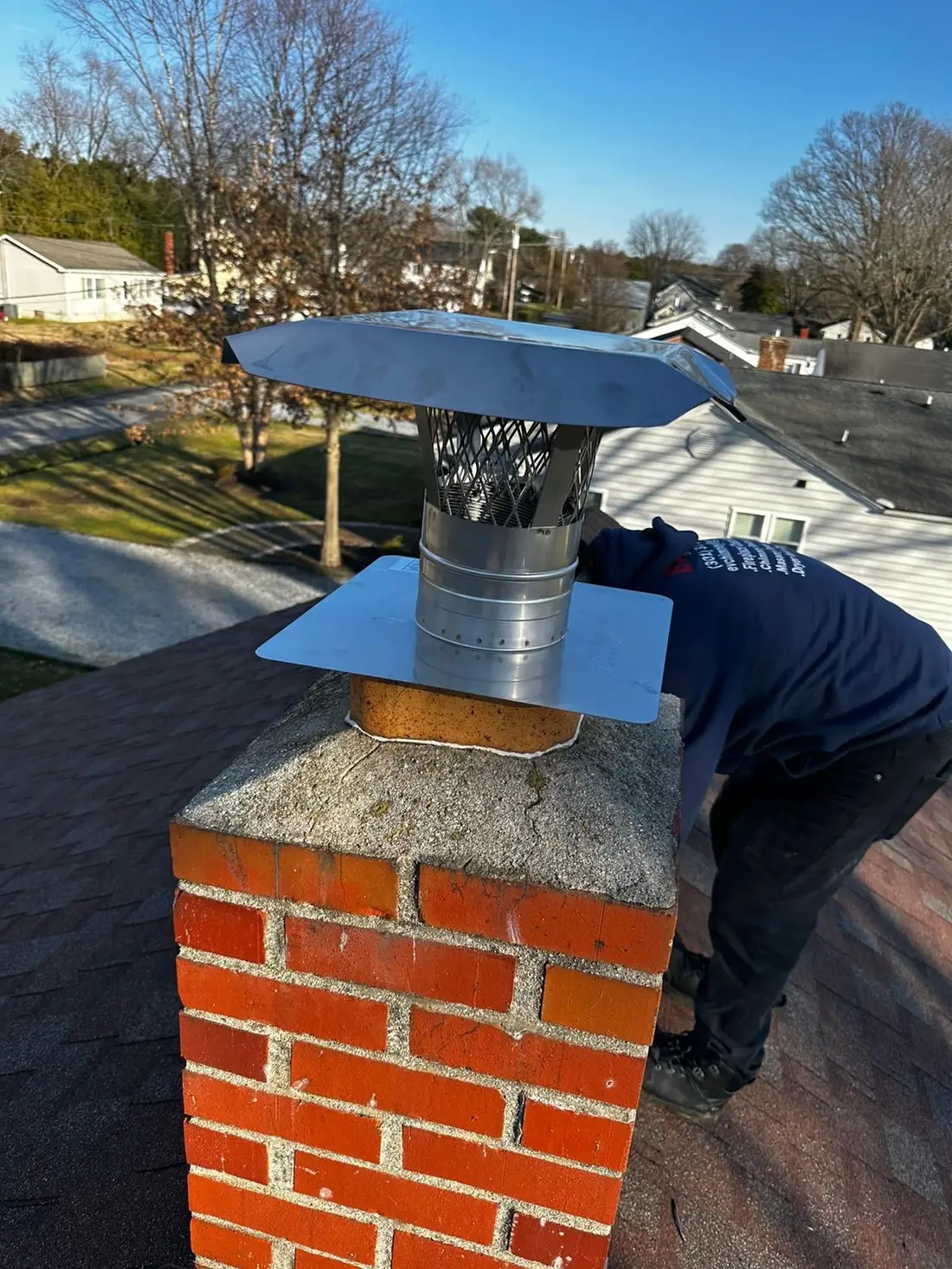
What a chimney cap actually does
A chimney cap is a small structure with four jobs. It keeps rain out of the flue — an open flue is a funnel that delivers water directly onto the damper, the smoke chamber and the internal masonry with every storm. It keeps animals out: raccoons raise litters in chimneys, birds nest in them (one species, the chimney swift, is federally protected and cannot be removed mid-season — a cap beforehand is the only clean solution), and squirrels and bats treat an open flue as an invitation. It keeps debris out — leaves and branches that dam moisture against the flue walls. And it works as a spark arrestor, screening embers that rise on hot gases before they can land on your roof. A cap is, dollar for dollar, the most protective component on the entire chimney — which is why its absence is the first thing we note on any inspection. Our article on why a chimney cap matters shows the damage patterns of uncapped chimneys.
Cap types, and why material is the decision
Single-flue caps mount to one flue tile or liner top and suit most chimneys. Multi-flue caps cover the entire crown in one unit — the right answer when several flues share a stack, when flue tiles sit low or uneven, or when the crown itself needs shelter. Top-sealing damper caps combine a cap with a damper at the top of the flue, sealing the chimney where heat loss is greatest. The material decision matters more than the style: galvanized caps rust — typically within a few years — and a rusting cap stains the chimney and fails open. Stainless steel is the professional standard and what we install: it outlasts the mortgage, shrugs off flue-gas corrosion, and carries the mesh sizing that screens animals and sparks while passing exhaust freely. Copper exists for historic and high-end work. When we quote a cap, you are told the material and gauge — a cap described only as "metal" is a rust appointment.
The crown: the chimney's roof
The crown is the concrete (or stone, or metal) slab that caps the masonry itself — distinct from the cap above the flue. Its job is singular: shed water off the top of the stack so the brickwork below stays dry. Crowns fail in predictable ways. They crack from freeze-thaw cycling once water finds the first hairline. They were often built wrong from the start — poured flat or sloped toward the flue instead of away, made of mortar rather than concrete (mortar crowns are the single most common original-construction defect we find), or poured tight against the flue tile with no expansion allowance, so the tile's heat growth cracks the crown from inside. A failed crown is a water inlet aimed at the heart of the chimney: the damage shows up as spalling brick below the roofline, white efflorescence, rusted dampers and — in the end — the masonry repairs that dwarf the crown's cost.
Crown repair, coating, and rebuild
Not every cracked crown needs demolition. Where the crown is structurally sound with surface cracking, a properly prepared elastomeric crown coating can seal it and buy years — applied over cleaned, primed concrete, it bridges hairline cracks and restores the water-shedding skin. Where cracking is deep, sections are loose, or the crown was mortar to begin with, the honest repair is removal and a rebuild: formed with a drip-edge overhang, sloped to shed water away from the flue, cast in proper concrete with an expansion gap around the flue tile so heat movement cannot crack the new work the way it cracked the old. We will tell you which situation yours is — with photographs taken standing on your roof, not guesses made from the driveway — and quote accordingly.
Signs the top of your chimney is failing
From the ground: rust streaks down the stack (a galvanized cap dissolving), a cap visibly tilted, missing or lying in the yard after a storm, white staining on the brick below the top, pieces of concrete or brick in the gutters or on the roof. From inside: water sounds or drips in the firebox during rain, a musty smell after storms, rust on the damper, debris and nesting material in the firebox. From the calendar: if the cap's age is unknown or the crown has never been looked at, that is itself a finding — these components live where nobody looks, which is why they are checked on every sweep visit we make. Animals in the chimney are the loudest symptom of all: scratching, chattering or fluttering above the damper means the flue is open for business.
One visit, both defenses
Cap and crown work belong together: the crew is already on the roof, the crown is exposed once the old cap is off, and a new stainless cap mounted over a repaired, sealed crown leaves the top of the chimney defended as a system. The combination is among the least expensive work we do and prevents the most expensive — water is the chimney's real enemy, and the top is where water gets in. If your inspection flagged either component, this is the page to start from; if nobody has ever looked, the sweep + inspection special will.