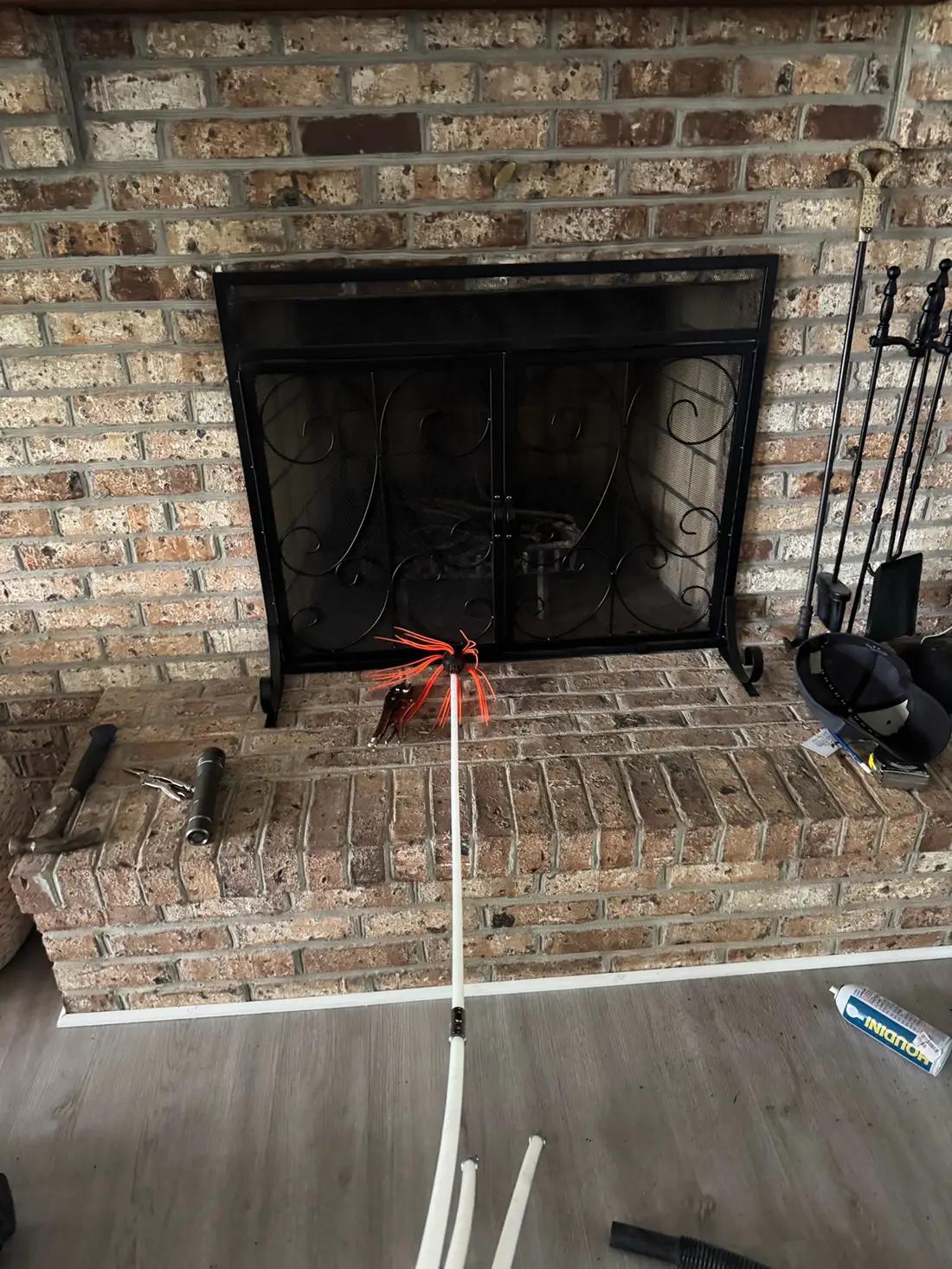
"Once a year" is the answer everyone gives, and it is a good answer — for the household it was designed for. But chimneys do not foul by the calendar; they foul by the fire. The honest interval depends on what you burn, how you burn it, and how much your household actually uses the fireplace. Here is the framework professional sweeps use, so you can place your own home in it.
The working rule: annual for regular wood heat
If your fireplace or wood stove is a real heat source — fires most evenings through the season, or a stove that runs daily — annual sweeping is not caution, it is arithmetic. A season of regular burning deposits creosote in the range that should be removed before it accumulates a second season's layer, hardens, and becomes both harder to brush and easier to ignite. This is also the rhythm insurance and common sense agree on: a documented annual sweep is the maintenance record of a wood-burning home.
The threshold sweeps actually use: an eighth of an inch
Professionals judge by buildup, not birthdays. Creosote at roughly an eighth of an inch thick is the widely used "due" threshold — at that depth, the fuel load in the flue justifies removal regardless of when the last sweep happened. Below it, a lightly used fireplace may honestly have another season in it. The practical consequence: the interval question is really an inspection question. A camera or even a good flashlight check during any visit measures your actual buildup, and your interval becomes evidence rather than estimate. Our inspection reports creosote by stage and depth for exactly this reason.
Occasional users: the honest stretch
A fireplace lit on weekends, holidays and the odd cold snap — a dozen or two fires a year — deposits a fraction of a heating household's creosote. For those homes, a sweep every one to two years, verified by a buildup check, is a defensible rhythm. What occasional users cannot skip is the inspection side: idle chimneys collect nests, water damage and rust in the quiet years, and a fireplace used rarely but wrong — say, with a flue half-blocked by a two-year-old nest — is more dangerous than a busy one. Rarely used does not mean rarely checked.
How you burn matters as much as how often
Two households with identical fire counts can produce very different flues. Wet or unseasoned wood is the biggest variable: it burns cool and wet, and its smoke condenses into creosote at several times the rate of dry, seasoned hardwood. Smoldering, damped-down fires — the overnight slumber many stove owners love — are creosote factories for the same reason: cool flue, rich vapor, maximum condensation. Hot, bright fires with seasoned wood produce the least buildup per hour of heat. If your burning habits live on the wet and smoldery end, your interval shortens no matter what the calendar says — and the cheapest interval-extender in the trade is a moisture meter and a woodpile managed a year ahead. The stages this buildup passes through are detailed in our creosote guide.
Other fuels, other clocks
Pellet stoves produce fine ash rather than creosote and need their venting cleaned roughly annually under regular use — ash restricts the narrow vent passages quickly. Gas fireplaces do not creosote, but their vents block (nests, debris) and their burners clog; annual service is the rhythm. Oil furnaces soot their flues and their condensate attacks tile joints; the flue should be checked with the furnace's annual service. One household rule covers all of it: every fuel-burning flue in the home gets looked at every year, and cleaned on the schedule its own buildup dictates.
A rhythm to adopt
Put the chimney on the same annual appointment as the season itself: sweep and inspect in late summer or early fall, before the first fire, when findings can still be addressed calmly. Judge each visit by the report — how much came out, what stage it was, what the flue looks like — and let that history tune your interval. A household that sweeps annually and reads its reports knows more about its chimney than any rule of thumb can tell it. That, and not a date on a magnet, is what fire safety actually looks like.